
How Nevada Court Records After an Arrest Begin
A Nevada arrest normally creates two different public-record paths. The first path is the custody record: the county jail, city detention center, or other holding facility records the booking, name, intake date, custody status, and release information if its roster publishes those fields. The second path is the court record: the criminal case that follows the arrest, with charges, hearings, filings, orders, dispositions, and sentencing records when a case reaches judgment. Those paths often overlap, but they are not the same record and they may update on different schedules.
That distinction is important in Nevada because the state does not operate one combined statewide jail-and-court search. Local jails serve recent arrestees, pretrial detainees, misdemeanor sentences, court holds, and short local custody. The Nevada Department of Corrections, officially abbreviated NDOC, handles sentenced state-prison offenders after a Nevada court commits them to prison. Federal BOP, ICE, and U.S. Marshals custody are separate from both county jail rosters and ordinary Nevada trial-court lookup.
The arrest side is best checked through Nevada inmate records and county roster access. The photo-and-booking side is covered through jail rosters and mugshots. The court-record side requires the local justice, municipal, or district court, or a participating statewide inquiry tool, depending on where the case was filed and which court has jurisdiction.
The Nevada Judiciary's trial-court technology overview explains why local court access varies across the state.
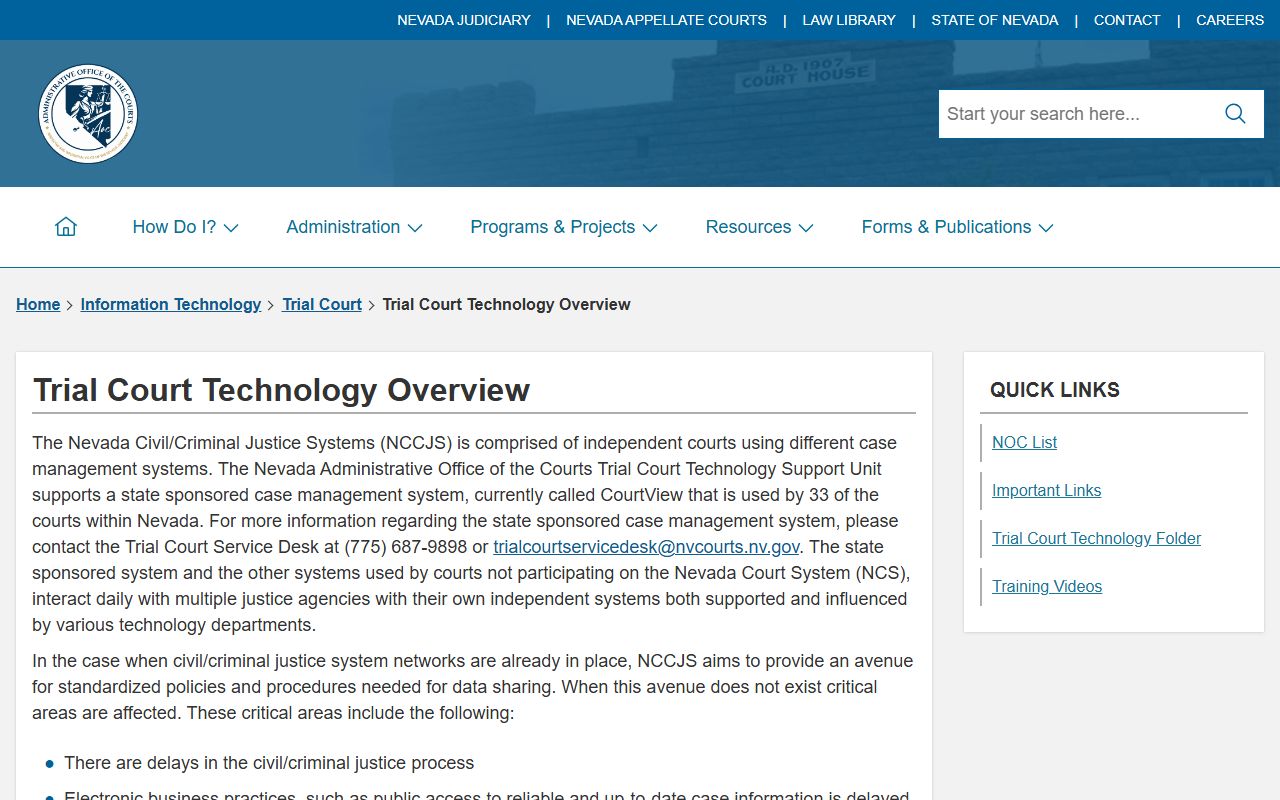
That statewide structure is the reason an arrest in Clark County, Washoe County, Carson City, Nye County, or a rural county may require a different trial-court search path even when the public-record law is statewide.
How Nevada Trial Courts Are Organized
Nevada's court-record landscape is distributed. The Nevada Judiciary's trial-court technology page says Nevada Civil/Criminal Justice Systems are made up of independent courts using different case-management systems. The state-supported CourtView system is used by 33 Nevada courts, but that does not mean every criminal case in every trial court appears in one universal public portal with the same fields, timing, and documents.
For a recent arrest, the court level depends on the charge, location, and prosecution path. Local justice and municipal courts may handle early appearances, misdemeanor matters, traffic or ordinance matters, and preliminary stages. District courts handle felony proceedings and other matters within their jurisdiction. The same person can have jail custody in one system, a local court case in another, and later NDOC custody if sentenced to state prison. A statewide page has to route by system rather than pretending all records live in one place.
The Nevada Court System Online Payment and Case Inquiry System provides case inquiry and payment access for participating courts. It is a useful statewide starting point where a court participates, but the research file is clear that local coverage varies. The statewide appellate ACIS portal covers Nevada Supreme Court and Court of Appeals matters, not every trial-court criminal docket after a jail arrest. Certified dispositions, sealed-record questions, and older files usually belong with the sentencing court clerk or local clerk that controls the case.
How to Find Nevada Court Records After an Arrest
The practical search starts with the arrest location and custody system. If the person was just booked, search the county or municipal jail roster first because the jail may update before the court docket is visible. After the case is filed, search the local court portal, the clerk's case index, or the statewide inquiry tool if that court participates. If the case later becomes an appeal, use ACIS for the appellate record rather than expecting the trial-court portal to show appellate filings.
- Identify the county, city, or facility that booked the person. Use the County Directory when the holding county is unclear.
- Search the jail roster for the booking date, agency, charge label, and custody status. Booking labels can be preliminary.
- Search the relevant justice, municipal, or district court portal or clerk index by defendant name or case number.
- Check whether the Nevada Court System Online Payment and Case Inquiry System covers the court involved.
- Use ACIS only for Nevada Supreme Court or Court of Appeals cases, not as a replacement for trial-court records.
- For certified dispositions, sealed files, or older paper files, contact the court clerk that controls the criminal case.
The court record may show charges that differ from the original jail entry. Prosecutors may file fewer, more, or different charges than appeared during booking. A jail roster may also lag after release or transfer, while the court record continues through hearings, orders, judgment, appeal, or later sealing activity.
Charges, Case Records, and Custody After a Nevada Arrest
After an arrest, the court record becomes the formal place to track the legal accusation and outcome. Nevada sentencing and court records are tied to statutes, charging decisions, court orders, and, if prison is imposed, NDOC timekeeping. Research for the state site emphasizes that court records and custody records should be read together but not merged into one assumption.
NRS 176.033 draws an important statewide line between misdemeanor or gross misdemeanor sentences and felony sentences. For misdemeanors and gross misdemeanors, when imprisonment is required or permitted, the court sentences the person to a definite period within the applicable statutory limits. For felonies, unless a statute requires a definite term, the court sets minimum and maximum terms. That minimum-and-maximum structure explains why later prison records often focus on parole eligibility, expiration, credits, and release events rather than a single simple release date.
| Record Layer | What It Usually Shows | Where It Belongs |
|---|---|---|
| Jail booking | Arrest intake, custody status, holding facility, and preliminary charge labels | County jail or city detention center |
| Trial-court case | Filed charges, hearings, orders, disposition, sentence, and court dates | Justice, municipal, or district court |
| NDOC prison record | State-prison offender data, custody location, sentence-management data, parole or release files | Nevada Department of Corrections |
| Notification record | Custody alerts, release notifications, and participating-agency status updates | Nevada S.A.V.E. or VINELink/VINE |
The correct statewide reading is sequential: jail booking first, court filing next, and NDOC only if a Nevada sentence places the person into state-prison custody.
When Court Records Lead to NDOC Custody
NDOC is not a statewide roster for everyone arrested in Nevada. It is the state prison agency for offenders committed to state prison and related NDOC custody settings, including major institutions, conservation camps, transitional housing, intake functions, and specialized medical or mental-health assignments. A person arrested last night in Las Vegas, Reno, Yerington, or Ely usually starts in a local jail roster, not the NDOC locator.
If a court sentence results in state-prison commitment, NDOC takes over sentence-management records. The Nevada Board of Parole Commissioners states that it does not calculate parole eligibility or sentence expiration dates; NDOC records statutory good time and other credits earned by prisoners. That division matters because a court docket may show the sentence imposed, while NDOC records manage prison custody, credits, parole eligibility data, and release-related files.
The NDOC public offender search is the correct statewide locator after a person enters Nevada state-prison data.
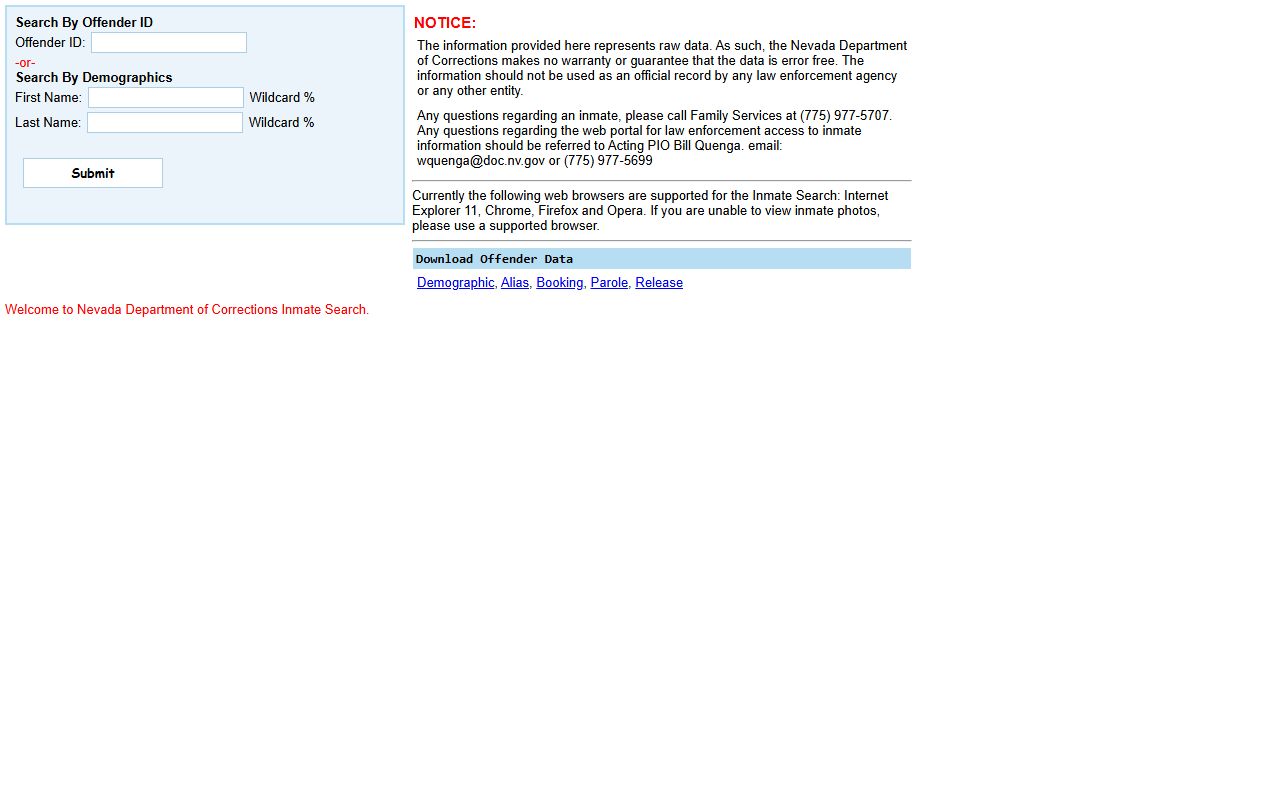
Use the offender ID when available, or search by first and last name with the wildcard option documented on the search page; for official copies or questions beyond raw search data, use NDOC records channels.
S.A.V.E., VINELink, and Release Information After an Arrest
Custody notifications are not the same as court records, but they are often part of the same search. Nevada uses statewide notification resources under Nevada S.A.V.E. and VINELink/VINE branding. County research shows that some sheriff sources point users to S.A.V.E. during roster transitions or for release notifications, which makes the statewide channel a useful fallback when a local roster is unavailable or changing.
The Nevada S.A.V.E. portal is the current statewide custody-notification portal identified in the research.
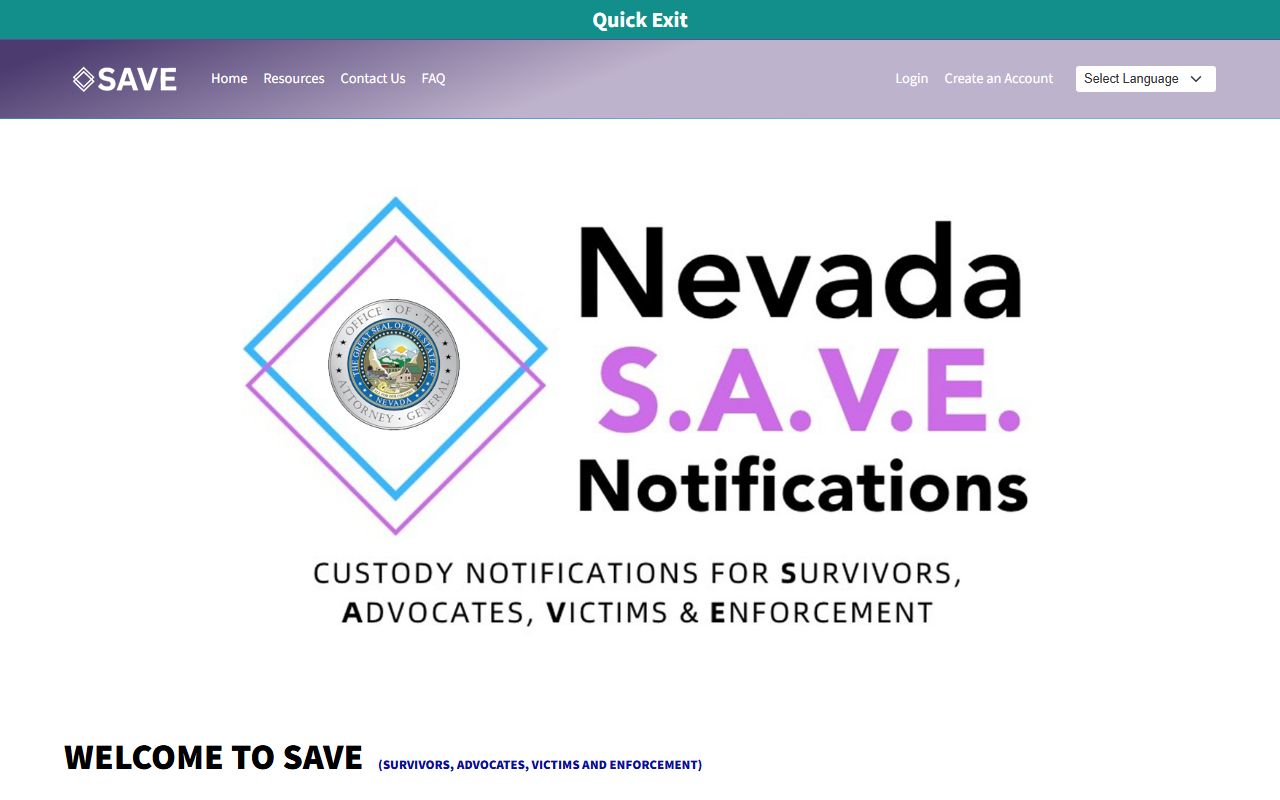
S.A.V.E. can help track custody notifications, but it does not replace the court clerk, the local roster, or NDOC when official records or sentence information are needed.
The Nevada VINELink page remains another statewide VINE access point used in county research and sheriff links.
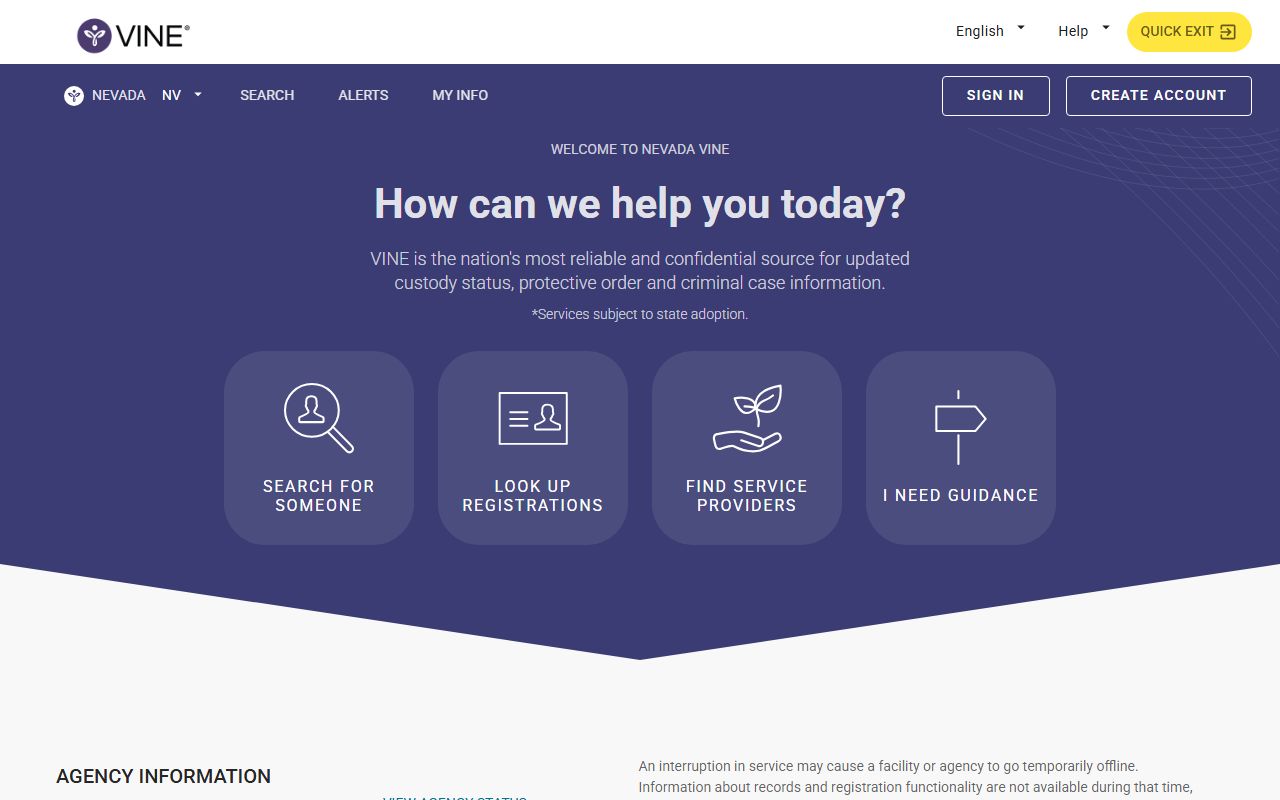
VINELink is best treated as a notification and custody-status tool, not as a certified criminal docket or complete case-history system.
Nevada Public Records Law and Arrest-Related Court Files
Nevada's general public-records law is NRS Chapter 239. NRS 239.010 says public books and records of a governmental entity must generally be open during office hours for inspection and copying unless a confidentiality rule applies. It also requires an agency to redact, delete, conceal, or separate confidential information where that allows nonconfidential information to be released.
NRS 239.0107 creates the key response-timing rule. Within five business days after receiving a written or oral request, the governmental entity must allow inspection or copying, provide a copy, say it does not have custody and identify the custodian if known, give written notice that more time is needed with an earliest availability date, or deny the request in writing with a legal citation for confidentiality. NRS 239.011 allows a requester to apply to district court if inspection or copying is denied, unreasonably delayed, or burdened by excessive or improper fees.
For court records after an arrest, the correct custodian is usually the court clerk rather than the sheriff. For jail records, the sheriff or city detention operator is usually the custodian. For prison records, NDOC directs offender information requests to omdrecords@doc.nv.gov or the Offender Management Division at P.O. Box 7011, Carson City, Nevada 89702, and public-record requests to publicrecords@doc.nv.gov through the Public Information Office. Picking the right custodian reduces delay because each agency controls a different record layer.
Federal and Immigration Custody Connected to Nevada Court Searches
Some Nevada arrests connect to federal or immigration custody. The research identifies ICE-listed Nevada detention locations connected to Henderson Detention Center, Lincoln County Detention Center, and Washoe County Jail, and it identifies Nevada Southern Detention Center in Nye County as a federal contract facility. Physical location alone does not answer which agency controls the record. A person housed in Nevada may be under county, municipal, NDOC, BOP, ICE, or U.S. Marshals authority.
The Federal Bureau of Prisons inmate locator applies to sentenced federal prisoners, including people who may be housed outside Nevada after a federal sentence.
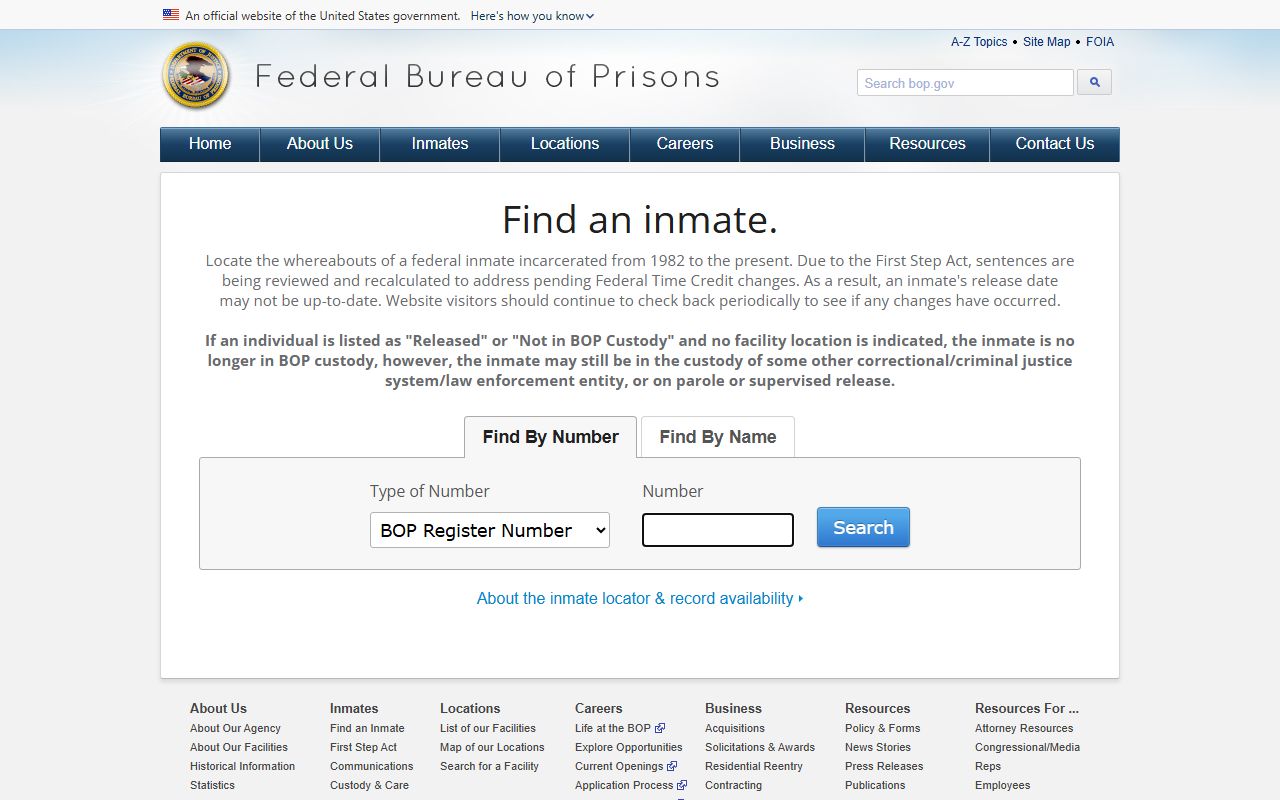
Use BOP for sentenced federal custody, ICE ODLS for immigration detention, and local or U.S. Marshals context when the person is in federal pretrial custody before BOP designation.
Restricted or Sealed Court Records After a Nevada Arrest
Not every arrest-related record is publicly available in full. Nevada research flags common limits for juvenile records, sealed court files, presentence investigation reports, protected victim or witness information, confidential medical or mental-health records, security-sensitive facility records, investigative materials, criminal-history repository records, and federal or immigration records outside state custody. Public-record law creates access rights, but it does not turn every custody, prison, or court record into an immediately downloadable public document.
Nevada criminal record sealing is addressed in NRS Chapter 179. A sealing order changes public visibility; it does not mean a jail roster, old third-party copy, court index, NDOC record, and notification system all update at the same moment. For anything time-sensitive or legal, confirm the status with the official court or agency that controls the record. Absence from one lookup is not proof that no arrest, case, custody hold, sealed record, or transfer exists.
Important: Informational lookup pages are not consumer reports and should not be used for credit, employment, tenant screening, insurance, or other FCRA-regulated decisions.
Public Record Search
Sponsored Results