
How Nevada Jail Mugshots Work
Nevada jail rosters and mugshots are local records first. A booking photo is normally taken by the jail, city detention center, or other holding facility that processes the arrest. The same booking may also create a custody record, charge labels, bond or hold information, and release data, depending on the roster fields published by that agency or its vendor. There is no single statewide mugshot gallery that covers every county jail, municipal detention center, state prison, ICE-listed facility, and federal contract facility.
The statewide research shows a mixed Nevada access map. Clark County has a dense detention environment with Clark County Detention Center, City of Las Vegas Detention Center, Henderson Detention Center, North Las Vegas Community Correctional Center, multiple NDOC institutions, and federal or immigration overlays. Rural counties may have one small jail, an app-based search, Citizen RIMS, Tyler Corrections Records Search, CrimeGraphics, Power BI, a phone fallback, or no public online jail roster located in the research. That variation is why the correct first question is not "where is the Nevada mugshot site?" but "which agency booked this person?"
A roster photo is not the same as a conviction record. The jail roster documents custody and booking information at a point in time. The court record tracks filed charges, hearings, orders, disposition, and sentence. If a person is later sentenced to state prison, NDOC custody records become relevant. If the matter is federal, BOP or U.S. Marshals context may control. If immigration detention is involved, ICE ODLS may be the right federal locator.
Where to Find Nevada Booking Photos
The search path depends on the custody layer. For a recent arrest, identify the county or city that booked the person, then open the correct local roster through the County Directory. If the roster has public profile pages, the booking photo may appear with the person's name, booking date, charge labels, facility, and custody status. If the local roster is down, unavailable, app-only, or does not publish photos, use the records-request path for that agency rather than assuming the photo is not public or does not exist.
- Identify the arrest location, holding facility, or booking agency.
- Use the County Directory to reach the local jail or municipal detention information for that Nevada locality.
- Search the roster by name, booking number, or available fields, then open the profile when the system supports public profiles.
- If the booking photo is not displayed, request the record from the sheriff, city detention department, or agency that controls the jail record.
- Use Nevada S.A.V.E. or VINELink for custody notifications when a local page routes users there or when notification is the immediate need.
The Nevada S.A.V.E. portal is the statewide custody-notification channel identified in the research.
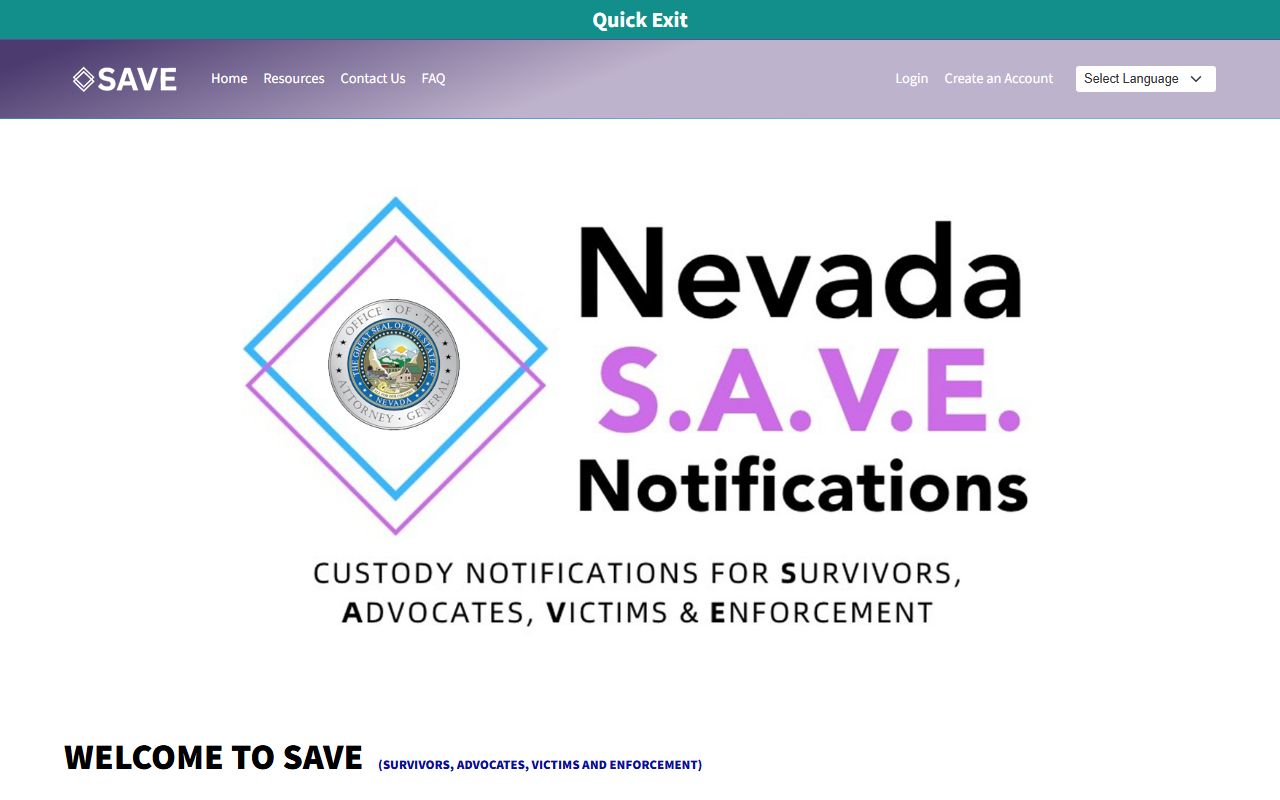
S.A.V.E. is useful when a roster is transitioning, unavailable, or when release notification matters more than seeing the original booking photo.
What a Nevada Booking Photo Profile May Show
Exact roster fields vary by county and vendor, so a statewide description has to stay flexible. A large urban jail may publish a searchable in-custody roster with profile details. A rural sheriff may publish little or no real-time roster information and require a phone inquiry or records request. A city detention center may have its own process separate from the county sheriff. Still, the public-facing booking profile commonly groups identity, booking, custody, and charge information around the photo.
| Field | What It Means |
|---|---|
| Booking Photo | The intake image created by the jail or detention facility during booking, when publicly displayed by that agency. |
| Name and identifiers | Name, booking number, jail number, or other local identifier used by the roster or vendor system. |
| Booking date | The intake date for the current jail event, which may be different from court filing dates. |
| Charges | Booking or filed charge labels; these can change once prosecutors file or amend charges in court. |
| Custody status | In custody, released, transferred, hold status, or other labels if the roster publishes them. |
| Facility | The jail, branch, municipal detention center, or other physical site connected to the booking. |
The table describes common roster categories, not a promise that every Nevada agency publishes every field. The research specifically notes that Nevada counties use different systems and fallback paths, including app-based tools, S.A.V.E. references, local portals, and direct sheriff contact.
Are Nevada Jail Mugshots Public Record?
Nevada's public-records framework starts with NRS Chapter 239. NRS 239.010 says public books and public records of a governmental entity must generally be open during office hours for inspection and copying unless another statute makes the record confidential. The same section requires redaction or separation where confidential information can be removed from nonconfidential information. That general rule can support access to jail records, but it does not mean every booking photo is instantly posted online or released without review.
NRS 239.0107 gives the response framework. Within five business days after receiving a written or oral request to inspect, copy, or receive a public record, the governmental entity must allow inspection or copying, provide the copy, state that it does not have custody and identify the custodian if known, give written notice that more time is needed with an earliest availability date, or deny the request in writing with a legal citation for confidentiality. NRS 239.011 provides a district-court remedy for denial, unreasonable delay, or excessive or improper fees, and NRS 239.0113 places the burden on the governmental entity to prove confidentiality when confidentiality is at issue.
Key statutes: NRS Chapter 239 supplies Nevada's general public-records framework for state and local government records. Confidential records, juvenile matters, sealed files, security-sensitive information, and protected personal information may be withheld or redacted under applicable law.
VINELink and Custody Notifications for Nevada Jail Rosters
VINELink and VINE appear in county research and sheriff links as custody-notification channels. They are not mugshot galleries, court dockets, or certified criminal-history systems. They can still be valuable when the user's need is to know whether someone is in custody, whether release notification is available, or whether a participating agency has a status entry.
The Nevada VINELink page is the statewide VINE access point captured for this site.
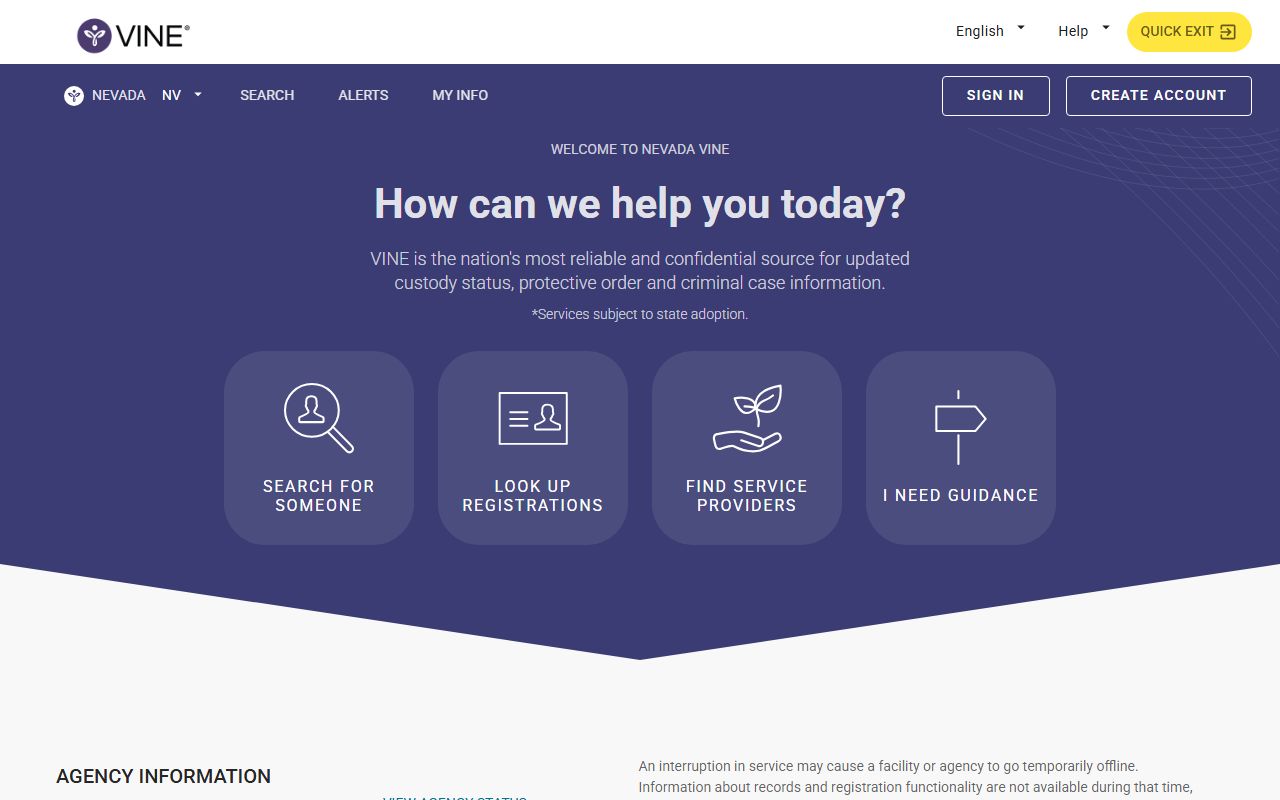
Use VINELink as a notification and custody-status layer, then confirm booking photos, charge details, and court outcomes with the local jail, court clerk, or agency that controls the original record.
How Long a Mugshot Stays on a Nevada Roster
The research supports a county-by-county answer rather than a single statewide retention promise. A booking photo may stay visible only while the person is in custody, may remain in a recent-booking feed for a limited period, may disappear after release, or may be available only through a records request. Some county sources use vendor portals or apps; others use phone or records channels. A temporary roster outage, app migration, or S.A.V.E. redirect does not prove the jail record no longer exists.
Public visibility also differs from agency retention. A sheriff's office or detention center may retain a booking image or booking packet even when the public roster no longer displays it. The right way to seek an older photo is a public-records request to the agency that booked or held the person, with enough identifying detail to locate the record: name, approximate booking date, facility, and, if known, booking number or case number.
What is and is not public: Nevada public-records law favors access to nonconfidential government records, but agencies may redact or withhold confidential material. Juvenile records, sealed court matters, protected victim or witness information, medical or mental-health records, and security-sensitive facility information can be restricted.
How to Request a Nevada Booking Photo
For a county jail booking photo, send the request to the sheriff's office or city detention department that created the booking record. For a city detention center, the custodian may be the city police, corrections, or public-safety department rather than the county sheriff. For a court record connected to the arrest, the custodian is the court clerk. For prison offender records, the custodian is NDOC. Matching the request to the custodian matters because Nevada agencies may respond that they do not have custody or control of a record and identify the proper custodian if known.
For NDOC offender information, the research gives two official routes. Offender information requests go to omdrecords@doc.nv.gov or ATTN: Offender Management Division, Nevada Department of Corrections, P.O. Box 7011, Carson City, Nevada 89702. Public-record requests use publicrecords@doc.nv.gov and the NDOC Public Information Office. NDOC's public-record fees page states its procedures are under NRS Chapter 239 and references the five-business-day inspection response.
The NDOC records and information page identifies the offender-record request path for Nevada state-prison records.
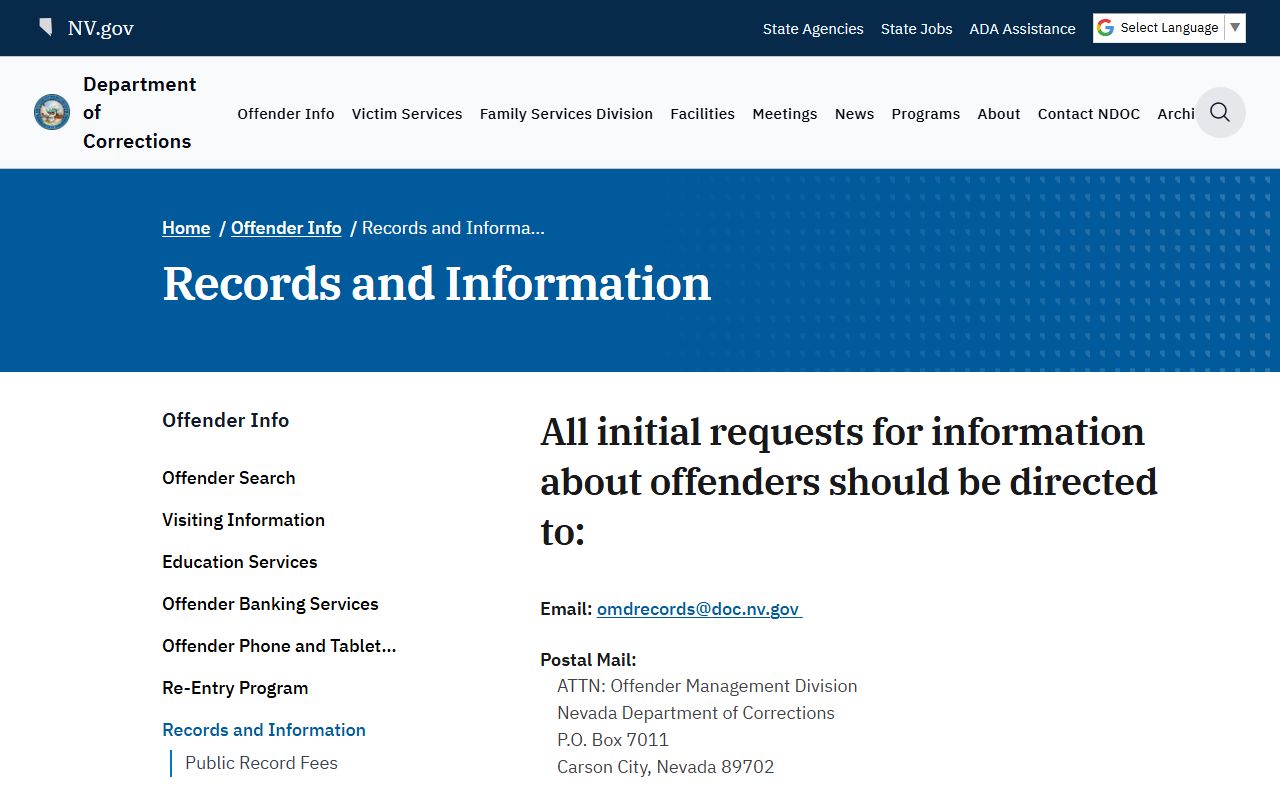
Use that NDOC route for state-prison offender records, while local booking photos should be requested from the local jail or detention agency that took the photo.
NDOC Photos and State-Prison Records Are Different
NDOC's public offender search is a state-prison locator, not a county jail mugshot roster. It applies when a person has been sentenced to Nevada state prison or otherwise appears in NDOC data. It does not replace county jail rosters for recent arrests, pretrial custody, local misdemeanor sentences, court holds, municipal detention, federal custody, or immigration detention. A person can be absent from NDOC because they are still in county jail, in city detention, in BOP, in ICE custody, in U.S. Marshals pretrial custody, released, listed under another spelling, or not sentenced to state prison.
The NDOC public offender search provides the statewide locator for sentenced Nevada state-prison offenders.
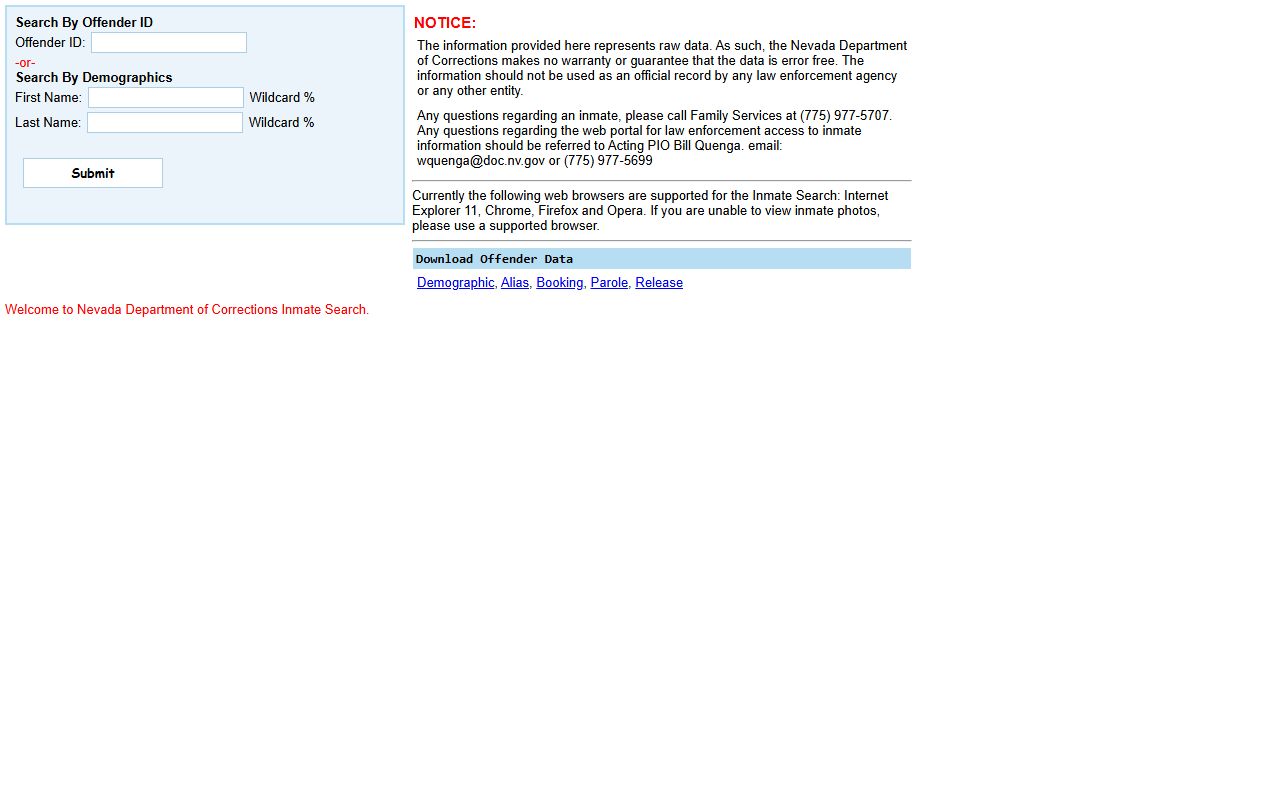
Search by offender ID when possible, or use first and last name with the wildcard option; treat the result as raw NDOC data rather than a certified law-enforcement record.
Federal, ICE, and Contract Detention Photos
Federal and immigration custody should not be folded into county mugshot expectations. The Federal Bureau of Prisons locator applies to sentenced federal prisoners from 1982 to present, searchable by number or name. A Nevada resident may be sentenced federally and housed outside Nevada, and a person arrested in Nevada by federal authorities may be in U.S. Marshals custody before BOP designation. ICE ODLS applies when immigration detention is possible, and Nevada research identifies ICE-listed facilities connected to Henderson, Lincoln County, and Washoe County, along with federal and ICE-related detention history at Nevada Southern Detention Center.
The Federal Bureau of Prisons inmate locator is the correct search layer for sentenced federal prisoners.
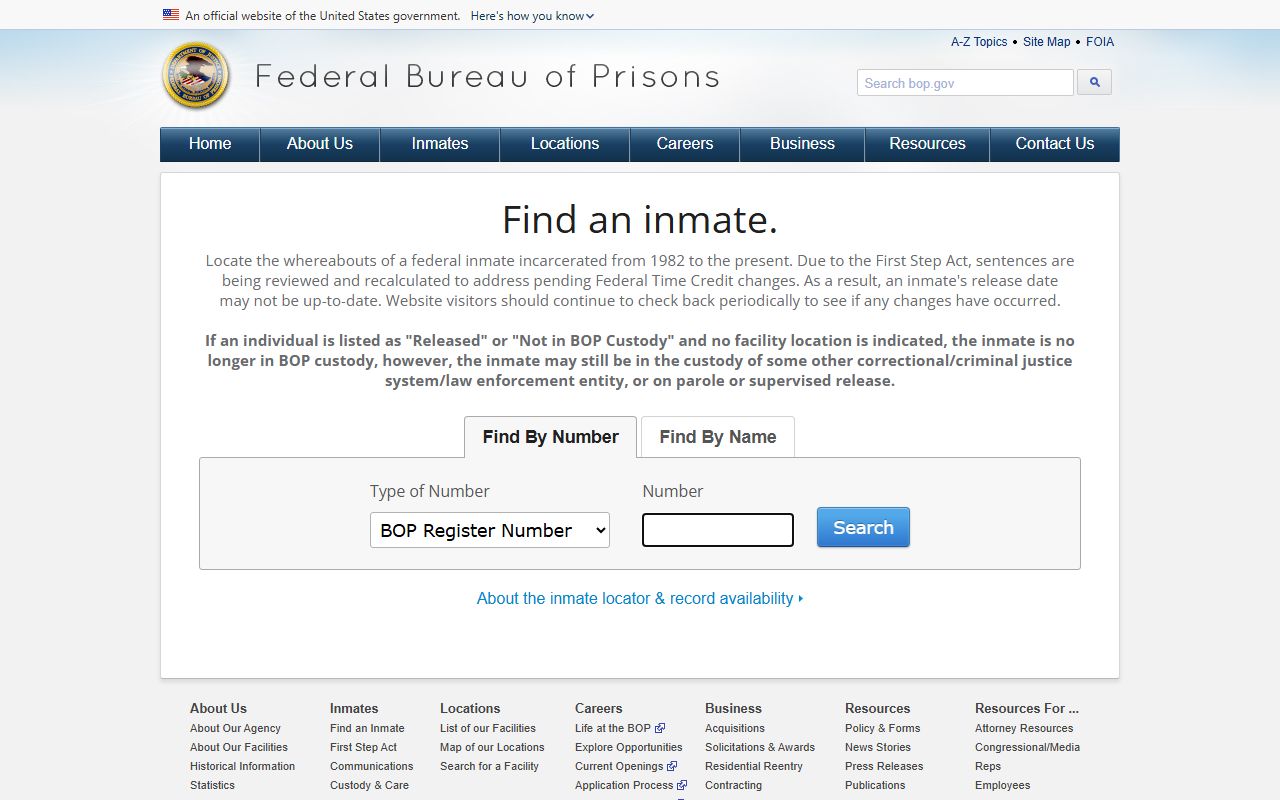
BOP lookup does not prove whether a recent Nevada arrestee is in a county jail, municipal detention center, ICE-listed local facility, or U.S. Marshals pretrial custody.
Mugshot Removal, Sealed Records, and Nevada Court Outcomes
A booking photo may remain visible or retrievable even when the criminal case later changes. Charges can be amended, reduced, dismissed, or resolved by plea or verdict. A court outcome is not automatically synchronized across jail rosters, notification portals, search-engine caches, NDOC data, federal systems, and court indexes. Nevada criminal record sealing is addressed in NRS Chapter 179, and sealing questions should be handled through the court and agencies that control the records rather than through commercial mugshot-publishing sites.
For arrest-related court outcomes, use Nevada court records after an arrest to distinguish booking records from filed charges and dispositions. For local custody, verify with the jail or sheriff. For NDOC data, use NDOC's offender and public-record channels. For notification entries, update registration through S.A.V.E. or VINELink where those systems apply.
Important: An arrest or booking photo is not a conviction. Confirm charges, dispositions, sealed-record status, and release information with the official court or agency before relying on the record.
Public Record Search
Sponsored Results